"I'm going to speak my mind because I have nothing to lose."--S.I. Hayakawa
_______________________________________________________
Showing posts with label photography. Show all posts

Thursday, March 12, 2020

The 2020 Africa Journals

Chapter Three

Down to the river and the boats


I’ll show you around the Pangolin hotel here in Kasane, Botswana later.   Right now, let’s get to the reason for being here.

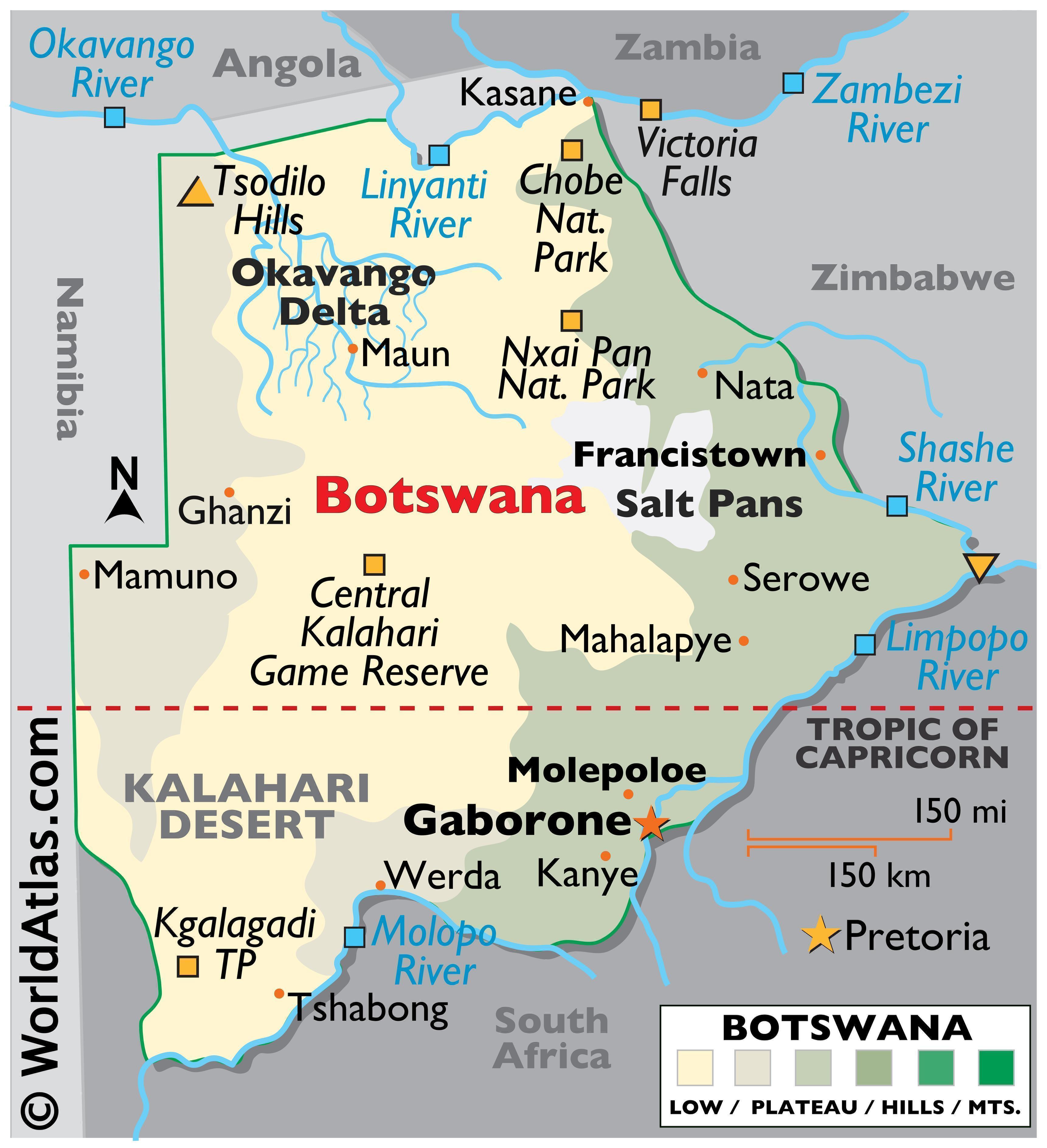
Image result for map of botswana
We are in Kasane at the very top of Botswana.   Four countries come together here--Botswana, Naibia, Zambia, and Zimbabwe.


We arrived just in time to somewhat unpack and get our gear squared away.   Then, after snacks at afternoon tea, it was down to the Chobe river where the photo boats are.   Pangolin is owned and operated BY and FOR photographers (beginners and experts)  and they have thought of everything.


A display at the lodge.


First, the boats.   There are three shallow-draft aluminum boats that feature a canopy that keeps the sun off the passengers and the cameras.   There are about eight seats with a vertical support mounted to the deck and gimbal heads to mount your camera/lens.

For non-photographers, a gimbal head is mounted to a single support and allows the user to pivot the camera up, down, and all around.   Seriously.  With swivel seats for the photographer, you can swing your camera to wherever the action is.  These are study, professional gear and you needn’t fear for the safety of your expensive gear.


Hopefully, though, you mind the length your lens is extended when swiveling past your neighbor.

There are even two cup holders included for beverages, or, in my case, a small notebook to write down the name of the bird or wildlife I was seeing and a soft drink in the other.

Janine (wife of owner Gerhard “Guts” Swanepoel and a photographer in her own right) was our guide and photo mentor on the first river trip and Tonya was at the helm.

I traveled to Botswana and the Chobe River in 2014 and stayed at a lodge along the river.  I went on a sight-seeing boat ride along the river a couple times and was astonished at the number of elephants I saw.  

I thought I knew what to expect.   HAH!  With a different focus, pardon the pun, I discovered there is much more to the Chobe than I thought, especially if one loves to photograph birds.


Guts and Tonya on a different day.


And birds were first on the slate.   Specifically, a small wading bird called a jacana.


Tonya steered the boat up a shallow waterway they call the “bird channel” to where a jacana was incubating eggs.   We dodged lily pads, thick masses of vegetation, and hippos on the way.   


Look at the feet on that little bird!  Jacana's average eight inches in length and have a wingspan of about 20 inches.

The female jacana often has a harem of males with which she breeds and then lays eggs in a simple nest on the ground.   But it’s the male (one of the males) that incubates the eggs and nurtures the hatchlings.


Tose amazing toes enable the jacana to spread its weight and walk on lily pads.


Every day, often twice during the same trip, we checked on the nest.   We all hope the eggs would hatch because the male then gathers the hatchlings under his wings and walks around the lily pads with long baby legs and feet dangling from his wings.  What a photo that would make!
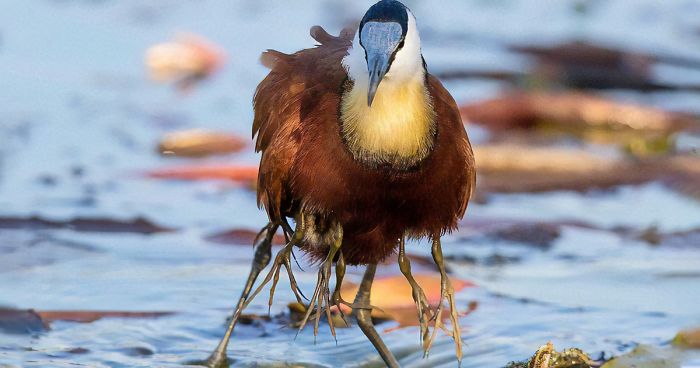

Image result for photo of jacana with hatchlings
Borrowed photo of a jacana with hatchlings under his wings.


I borrowed this photo: 


 These are mine.


A nest with four eggs.

Daddy on the nest.


It was not to be.  The eggs didn’t hatch until two days after we left.   Nevertheless, we took a proprietary interest in the bird and his eggs and spent a lot of time with him.   He didn’t care and when we found he wasn’t on the nest a couple times, began to suspect we were baby-sitting the eggs while he was off for a burger and a beer.


Look at those exquisite eggs!


Wednesday, March 28, 2018

A Primer on Birds in Flight Photography


A Primer on Birds in Flight Photography
—presented by Tongue-in-Cheek Publishing


You see them everywhere, those sharp, crisp, colorful and perfect photos of birds in flight (BIF).   It is something every photographer tries, but which is accomplished only by the very expert.

Or sometimes by the lucky who accidentally get a good shot of a feathered missile flying past, which would be me.   The lucky, not the missile.  Which was a long time ago, and DISCLAIMER!!!  does not include any of the included photos.


A gorgeous male mallard in its breeding colors.   Look at the cute little curls on its tail.


Having tried my luck and found it wanting, I have a few suggestions and tips for BIF photography:

1.      Birds are under no obligation, either by their own choice or under union contracts, to notify you when they choose to fly.  However, many birds unintentionally clue you in with body language:   they poop.


2.      Therefore, you must constantly be aware of pooping birds, or, lacking that important clue, have expert hand and eye coordination.  I do not.   I think I am so entranced with the miracle of flying birds that by the time I realize what a great photo that would make, it’s too late.


So much wrong with this photo, but I really like that all three mallards had their wings in the same position.


3.     I recently had occasion to be in the right spot to observe BIF, that being water and many mallards in front of me, while behind me was another flock of mallards that wanted to be on the this side of the pond.   The sun was in the right position, being at my nine o’clock, so when the ducks took flight the first thing I saw were their shadows cast on the snow in front of me.   You would think that would be sufficient warning, right?


4.     Sometimes it was; sometimes not.  The shadows did give me time to raise the camera, but zooming in on an individual duck was near impossible.   Instead, a lot of cropping of the photos was necessary to detect what it was that I was trying to photograph.   Oh, and that cropping results in loss of quality and that's why these photos are so poor.  Yes, that's why.

5.     Sparkle.   A bit of light reflecting in the bird’s eye is essential in any photo or birds, animals, or humans, flying or not.   Otherwise, the bird’s eye is a dead dull black.  Ducks know that.   They go to great lengths to avoid eye sparkle when photographers are near.


You can see this female intentionally hid her eye so as not to have that little spark of life in her eye.

6.     You would think that with the sun over my left shoulder and the mallards flying from that angle to my one or two o’clock, all the duck eyes would sparkle.   Not so.


What would otherwise have been a nice photo is ruined by the top bird being in the frame.


7.     Instead, the ducks concentrate more on their shadows rather than their sparkles.  I witnessed this bit of duck behavior and can attest to its veracity:   the duck’s shadow on the snow marks its landing spot.  


8.     Next time you’re out watching birds, watch and see if it isn’t true.   The bird lands where the shadow marks the spot.

9.     Spot on!


10.  Uh, this mallard, perhaps blinded by the sun on snow, used water-landing techniques instead of solid surface techniques, which result in abrupt stops instead of waterskiing across the surface.  You can almost hear it saying, “OOF!”    Can’t you?


11.  It is essential, in this instance, that the mallard act as if it intended this landing, especially when a bunch of its buddies are there to critique the landing.


"Why, yes.   This IS where I intended to land."


12.  For some reason I haven’t discerned, female mallards are more cooperative than the males.


Look at that!   Nice attitude, sparkle in the eye, unobstructed background, all attention drawn to the subject.   Perfect.   Too bad it isn't in focus. 


You will find that when  a male seems to be cooperating, it will make sure the background is exceptionally cluttered, thus ruining the photo.


There's that cluttered background again, but the female's eye is visible.


Or, it hides in a group of other ducks, again ruining the shot.   Faces hidden, no eye sparkle: boo.


What a mess.


Technique, mallards.  Technique.   Our mallard that made the poor landing is just right of center.   Just remember, pal, any landing you walk away from is a successful landing.