"I'm going to speak my mind because I have nothing to lose."--S.I. Hayakawa
_______________________________________________________
Showing posts with label camp. Show all posts

Monday, December 19, 2022

The 2022 Africa Journals, Chapter 8: Coughing, Sneezing, and Hacking

Chapter 8

Coughing, Sneezing, and Hacking


My dear doctor, I am surprised to hear you say that I am coughing very badly, as I have been practicing all night.-John Philpot Curran


Marg is coughing and trying to clear her throat. I hand her several Riccola throat lozenges and tell her I have more if she needs them.


I, too, have been coughing, sneezing, and trying to stop a tickle on my tonsils.   Sometimes my eyes feel like I’m looking through the wrong end of binoculars.    I hope I’m not getting sick with a cold.  (I never do.)


The sugarless lemon/mint flavored lozenges are my stand-by remedy.  I always have a few in my pocket on games drives and I make sure there are a couple-along with my water bottle-on my nightstand.   Marg and I are sharing a tent and I don’t want to keep waking her with my hacking.


It would be more than a week before I realize what is causing my discomfort.    It’s the dust of dry and arid Amboseli.


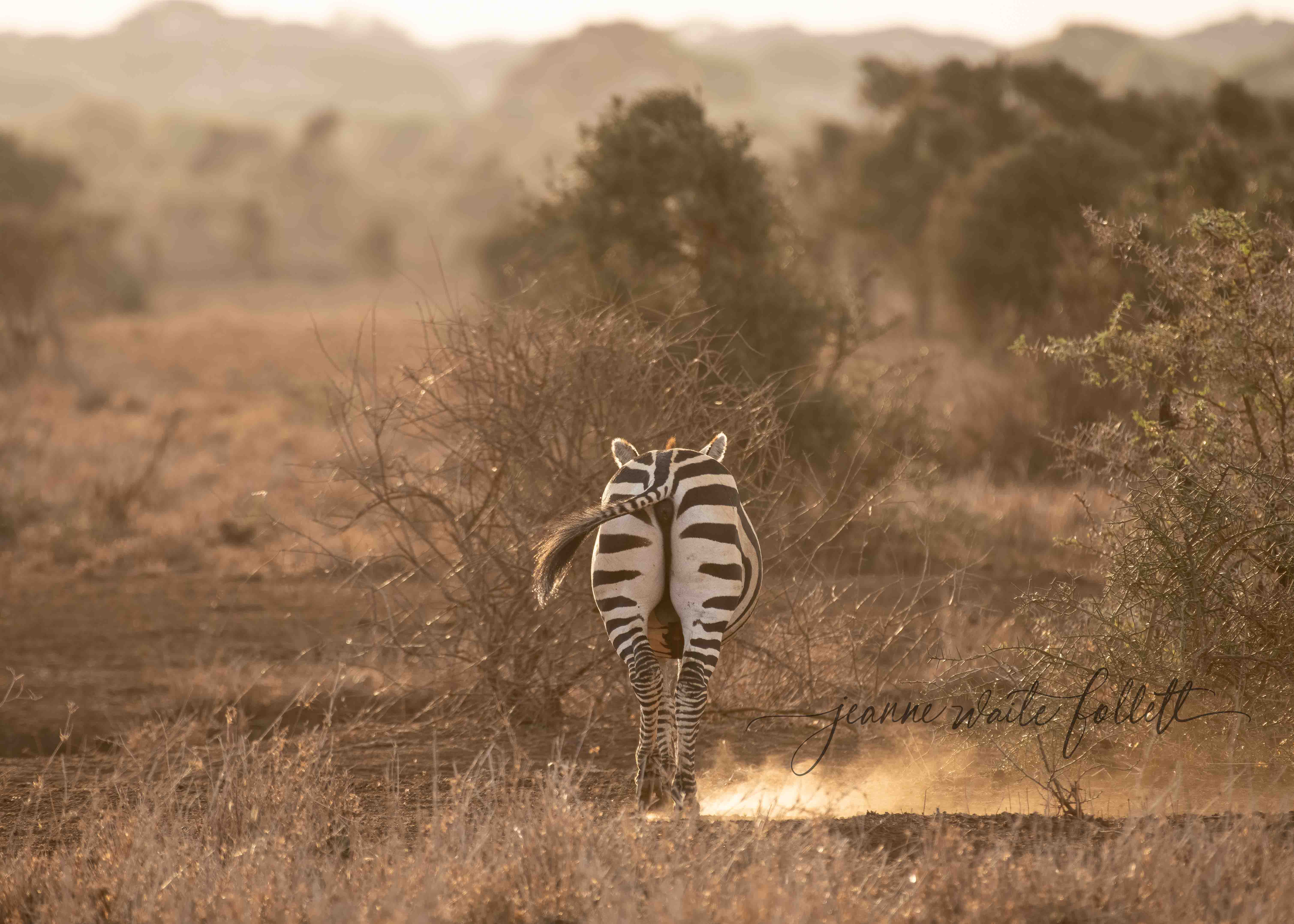
Almost every game drive when we see animals walking on sand, they are kicking up clouds of dust.   I spot a zebra late one afternoon and it leaves clouds of dust as it walks away from us.


A herd of elephants coming through the trees and brush stir up dust.   


Sometimes, though, the elephants enjoy dusting themselves, especially after a bath.   The dirt clings to the water and creates a crust that protects their hides from the sun and insect bites.


This Ellie is getting as wet as it can in preparation for a dust bath.


It’s a kick to watch the ellies when they do this.   I watch in awe and wonder why a trunkful of dry dirt doesn’t make them sneeze.   Now that would be something to see.   Would it trumpet at the same time?


The dust baths are also why the elephants of Kenya as as red as the Kenyan soil.


Even the vultures raise dust.


Note the dust cloud from the approaching vehicle.


***


During the mid-day break, I scout the photo ops within the camp.    Why aren't we out then? Why do we not go out until four in the afternoon?


Because it's siesta time for the animals.   They sleep then, or rest in the shade.   Lions become known as "flat cats" in that situation.   Plus, it's often too hot.


So, camp photos it is.


I have seen mousebirds flying back and forth and I follow them.


Speckled mousebird

Speckled mousebird

Superb starlings


Von der Decken's/Jackson's hornbill in camp.


Tonight's dessert.


There wasn't much to see on the evening drive.   We went to the ranger's station waterhole and found baboons and some birds.


Yellow baboon.


Von der Deckens/Jackson's hornbill


Gerenuk stag
Goshawk

Black-headed heron.


The surprise of the day was a sundowner, the evening ritual of having a drink to the end of another day.


Amarula on the rocks.  Our traditional toast to Africa and good friends.

Marg is waiting for the other trucks to arrive.  Ooops.   No, she isn't.   She already has her Amarula on the rocks.


Sundowner snacks.


And we watch the sun go down as clouds bring scattered showers to Amboseli.


Saturday, November 4, 2017

The Wyoming Journals, Ch. 2: Roughing It, Wyoming Style


Ch. 2:   Roughing It, Wyoming Style


The Alaskan hunting camps to which I accompanied my husband had four things in common:   tents, bonfires, sleeping bags, and mosquitoes.

The reason for the tents is obvious—protection from the weather and to keep the magpies from running off with your small equipment.

The bonfires (campfires) were multi-purpose—warmth, cooking, drying clothing, and perhaps keeping curious bears at bay.

The sleeping bags and mosquitoes, again obvious.   One necessary and the other a nuisance.

Of the three different camps, one was accessed by small float plane, one by riding horses (or leading, depending on how much your knees hurt) fifteen miles into the mountains, and the third by wrestling a four-wheel ATVs thirteen miles along dirt trails, over boulders, and through water deep enough to make you ride with your feet on the handlebars.


They do things differently in Wyoming.   Moose hunting in Alaska is done usually from Sept 1 to Sept. 15, depending on the whims of the game board.   In Wyoming, elk season opens in October and runs through whenever, again depending on the whims of those who run those things.


Mule deer just outside of camp.


After I’d been in my cousins’ elk camp a few days, I said, “So, what you need to hunt elk in Wyoming are a couple $200,000 RVs, a couple antique trucks, and MREs?” *

The response was laughter, but nobody denied my observation.   The only things in common with Alaskan hunts were the sleeping bags, even though we were bedded down in those luxurious movable land yachts.


Still autumn at this elevation.

When my cousin Christine picked me up in Denver and drove us to the Snowy Mountain range in southeastern Wyoming, the first order of business was to set up the portable, hand-made outhouse.    A hole was dug, the floor set, the walls screwed together and the top set in place.   The throne was installed and straps were fastened to guy brackets screwed into the ground were to thwart the Wyoming winds.


Chris and her dad Bud assemblingt he sections and appurtenances.


Bob with the roof.  Note the red straps holding down the outhouse.


Installing the door.


Bud, Chris, and Bob celebrating its completion.

Chris and the outhouse.   That lamp heats it.

Then came the unbelievable:   a propane lamp not only provided illumination but also heat, so much heat that I began called the structure the sauna.  An automatic air freshener periodically dispensed a pleasant masking aroma to cover natural unpleasant aromas.   TP was placed on a stainless-steel shelf, and a magazine rack attached to the inside of the door.   There was no Sears catalogue, however.


Good for drying boots, too.


With the obligatory crescent moon sandblasted into the door’s window, the interior light shining through was a beacon to the outhouse at night.


Two tents were erected:   one, the garage, for storing propane bottles and gasoline containers for vehicles and the ATVs, and another, peculiarly called the cook tent, was for drying clothing, and changing into and out of the warm camouflage gear and boots.    I'm not sure why it's called the cook tent.   No cooking was done in it, but there was a grill set up outside.


Bud's handmade frame for the tent.


It's easier to assemble if you  lay it  out in the right orientation....


The cook tent in the foreground and the garage in the rear.


Nice and warm and perfect for drying boots and clothing.


A truck with a hundred-gallon propane bottle in back supplied gas to the two RVs for heat, cooking, and hot water.  The camp was completed with an artificial grass lawn “planted” between the two RVs and held in place with big rocks.


A camp near us.

All set up.


Brad's 5th wheel trailer is at left.   After this photo was taken, the guys fastened a yard light to the top of the ladder.   A YARD LIGHT, no less.   Bud's Class A motorhome is at right and to the right of that is his '81 Ford Bronco, the hunting vehicle.  It is one of the two antique vehicles necessary to hunt elk in Wyoming.


Brad, left, and his son Charles in front of the second antique hunting vehicle.  


Note the yard light on the top of the 5th wheel trailer ladder.


Brad's son Charles and Cousin Bud sitting around the non-existent campfire.


 Now, if you think I'm having a bit of fun writing about this magnificent hunting camp, well, I am.   But if you think about it, most of us are in our 70s and comfort is appreciated.    Sleeping on the cold ground inside a tent that drops frozen condensation crystals on your sleeping bag (which then melt and dampen your bag) is not fun.


Bud's motorhome was the real cook shack.   Here, Brad prepares salads for dinner.


Bud helps by staying out of the way.   And quiet.   No snoring.


Also, consider the mechanical talent and care it takes to keep those antique vehicles running.   Consider the ingenuity put into all the handmade equipment like the tent frameworks and the outhouse.   Brad and Bud have been hunting together for decades and they have perfected this camping thing.

Not so much with the MREs, though.


There were no mosquitoes or campfires.

This is roughing it in style at 8300 feet elevation.


*MREs is the acronym for Meals Ready to Eat, and are packaged military rations with water-activated hydrogen heating packets.   Ours expired in the Pleistocene epoch.


The equipment trailer.


This is Bob in the equipment trailer, trying to get to spools of wire rope (cable) that are UNDER the two 50 gallon blue potable water barrels.