
The Africa Journals
Chapter 50
The Boers Move Inland
Life is too short to drink bad wine.
—Anonymous
When the ambitious settlers at Cape Town search for fertile land to raise crops for the Dutch East India company's passing ships, they found the area now known as Stellenbosch, now the second oldest city European-founded city in South Africa.
The Boers (Dutch farmers) were able to raise produce, harvest domestic or wild animals, and supply fresh water to the ships plying the lucrative spice trade from India to Europe. They planted vinyards, intending to meet the demand for wine aboard those ships.
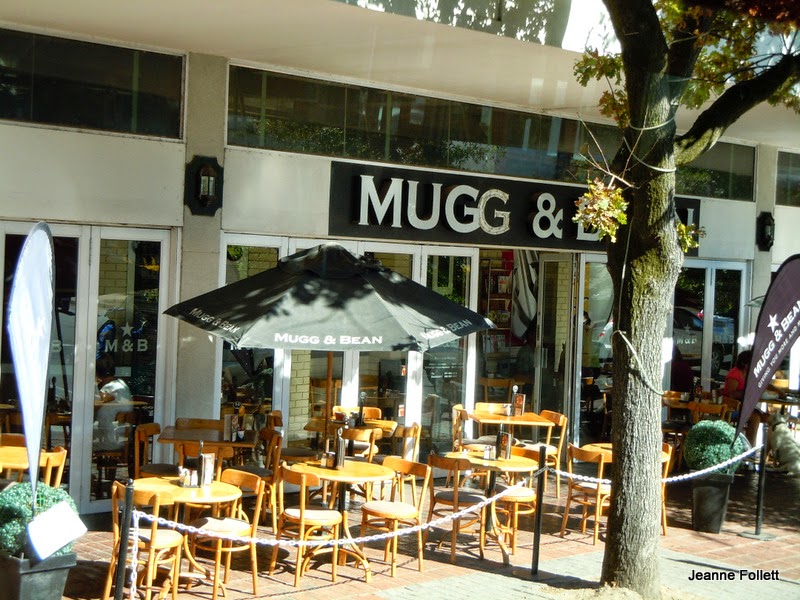
We board the coach and drive to downtown Stellenbosch, the heart of the wine growing country. It’s a beautiful, quaint (read expensive)
town, the home of the University of Stellenbosch where tuition is $6000 to
$12,000 a year. It’s a nice town to
visit, with its sidewalk cafes and gift shops.

 | |
| Wall hanging in gift shop |
 | |
| Dutch Reformed Church, Stellenbosch, consecrated in 1723 |
 | |
| Lovely tree-lined streets. |


 |
| Street corner landscaping |
 |
| Burning man statue. See below. |


 | |
| Unique use for a wheelbarrow. |

 | |
| Street corner art. |
I went into a grocery store to get an idea of the
culture.


 | |
| Entrance to a vinyard and winery. |


Eventually, we arrive at what is now a
restricted historical site, Drakenstein Correctional Centre, once known as Victor
Verster prison, where Nelson Mandela spent his last 14 months as a political
prisoner of the apartheid regime in South Africa. During his time here, he lived in a private
cottage on the grounds and was allowed family visits. Mandela’s imprisonment was extended because
he refused conditional release.


 |
| Mandela in mid-stride is meant to evoke his book and his personal journey, Long Walk to Freedom. |
Ah, yes. I can count on Brian for my daily groan, and so close to lunch, too.