"I'm going to speak my mind because I have nothing to lose."--S.I. Hayakawa
_______________________________________________________
Showing posts with label Stanley. Show all posts

Monday, May 5, 2014

The Africa Journals, Ch. 42, Dr. Livingstone, I Presume? Part 4


The Africa Journals

Chapter 42
Dr. Livingstone, I Presume?


Henry Stanley, dispatched by the New York Tribune on a secret mission to find the missing hero Dr. David Livingstone, was finding that everything in Africa bites, stings, or scratches.  He had malaria, suffered dysentery from drinking the water, and even came down with smallpox.   An early morning hunt in his favorite pajamas resulted in Stanley making the acquaintance of barbs and cactus spines when he tripped and fell.


Crossing the dreadful swamp of the Makata Plain.   This journey took more than two days.  Photo from Princeton.edu files


When he was well enough to travel, or be carried on a gurney, his trek pressed onwards towards Ujiji on the eastern shore of Lake Tanganyika, hoping that he would find the missing man or at least hear of his whereabouts.
***

Livingstone wasn’t missing.   He knew exactly where he was all the time and he wasn’t happy about it.   He was many miles from Ujiji, now stuck in a small village occupied by the hated Arab slavers and dependent on them for his very existence.

Porters had absconded, taking with them his precious medical chest that contained the medicines he could have treated his malaria, chronic dysentery, pneumonia, and the bone-eating tropical ulcers on his feet that were now infested with maggots.

Eventually, Livingstone recuperated enough to make his way to Ujiji, traveling through country inhabited by cannibals and warring tribes.  Upon his arrival, he was crushed to find the Arabs had plundered his supplies, and he was now destitute and again dependent on the slavers for his welfare.

No, Livingstone hadn’t known he was missing, so he was pleasantly surprised to learn that a white man had entered the village.   Then he saw the man, who doffed his hat and said, “Dr. Livingston, I presume?”   But Livingstone politely assured the newcomer of his identity and then learned the man was Henry Stanley, sent by an America newspaper to find him.  “I thank God, Doctor, that I have been permitted to see you,” said Stanley.

“I feel thankful that I am here to welcome you,” replied Livingstone. 


***

Stanley remained with Livingstone for some time, and the two explored together long enough to determine that Livingstone’s quest to find the source of the Nile would require even further treks.  Stanley returned to civilization, and a year later, still seeking the source, Livingstone died while kneeling to pray at his bedside on May 1, 1873 at the age of 60.  

He faithful attendants, Chuma and Susi, decided that Livingstone’s heart should be buried in Africa, the country in which he spent his life spreading the Christian religion.   They removed Livingstone’s heart and other internal organs, placed them in a metal box, and buried it under a tree in what is now Zambia. 
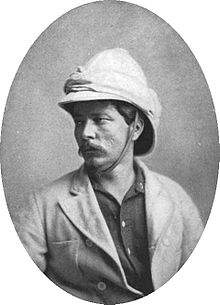
Henry Stanley
Then, in an incredible act of love and devotion, Susi and Chuma prepared the body for travel by salting it and exposing it to the African sun for a month.   They then wrapped it in sailcloth and mats, disguising it to look like trade goods, and carried it 1500 miles to the coast.  Their nine-month trek was made longer than necessary to avoid hostile tribes, and where local superstition made natives afraid of dead bodies and would prohibit transport through their territories.

The preserved body of Livingstone was returned to Great Britain and buries at Westminster Abbey. 

Stanley, his fame assured by finding Livingstone, went on to explore even more of Africa.   He died in 1904 in 1904.


***

As Russell Gammon concluded his talk about Dr. Livingstone, our river boat was nearing its dock on the Zambezi River.  His final words about Chuma and Susi transporting the body had brought tears to Gammon’s eyes.  

At least, I think they did.  Hard to tell because I was looking at him through my own tears.


Russell Gammon


Map of Livingstone's journey to Ujiji and Stanley's trek to find him.


We are to leave Victoria Falls in the morning, but we have a couple more adventures before that departure, so off we go.

Wednesday, April 30, 2014

The Africa Journals, Ch. 41, Dr. Livingstone, I Presume?, Part Three


The Africa Journals

Chapter 41
Dr. Livingstone, I Presume?
Part Three


I had intended to have gone into Africa incognito. But the fact that a white man, even an American, was about to enter Africa was soon known all over Zanzibar.—Henry Morton Stanley
 

John Rowlands was on a roll.   Well, as fast a roll as 200 porters, each carrying 70 lbs. loads, numerous pack animals, and wretched conditions would allow.   The caravan was so large, Rowlands split it into several sections, sending them on ahead while he brought up the rear.


Rowlands had been kicking around most of his life, as well as been kicked around.   Born in 1841 as the offspring of the town prostitute and the local drunk, the notation of “bastard” on his birth records had plagued him.  He lived with his grandfather for five years until the old man died, and then through subterfuge was abandoned at a poorhouse where were encountered the abusive horrors of overcrowding and little supervision.

At 17, Rowlands signed on as a cabin boy on a ship headed to the United States, then found himself seasick and high in the rigging, tending to the sails during the worst weather of the season.  He jumped ship in New Orleans, and eventually enlisted in the Confederate Army just in time for the Battle of Shiloh, where 10,000 men died in less than 24 hours.  He was taken prisoner during his second day on battlefield and placed in a Union POW camp.  

Two months of that was all Rowlands could take and he enlisted in the Union Army.   He was discharged after 18 days because of extreme illness.   Then he found employment in the Union Navy as a ship’s clerk.   He deserted and went west to cover the Indian Wars for a newspaper service.

He talked his way into a job as a reporter for the New York Herald, then the top newspaper of 11 in New York City. Now, tramping through the mud and heat of Africa, Rowlands was on a secret mission for that paper.

Better yet, he was putting his personal demons behind him while leading this expedition into Central Africa.  He was sure his cover story of being a journalist writing a travel story was accepted in Zanzibar, where he provisioned this mass caravan, though many there wondered about the enormous amount of supplies he had purchased.

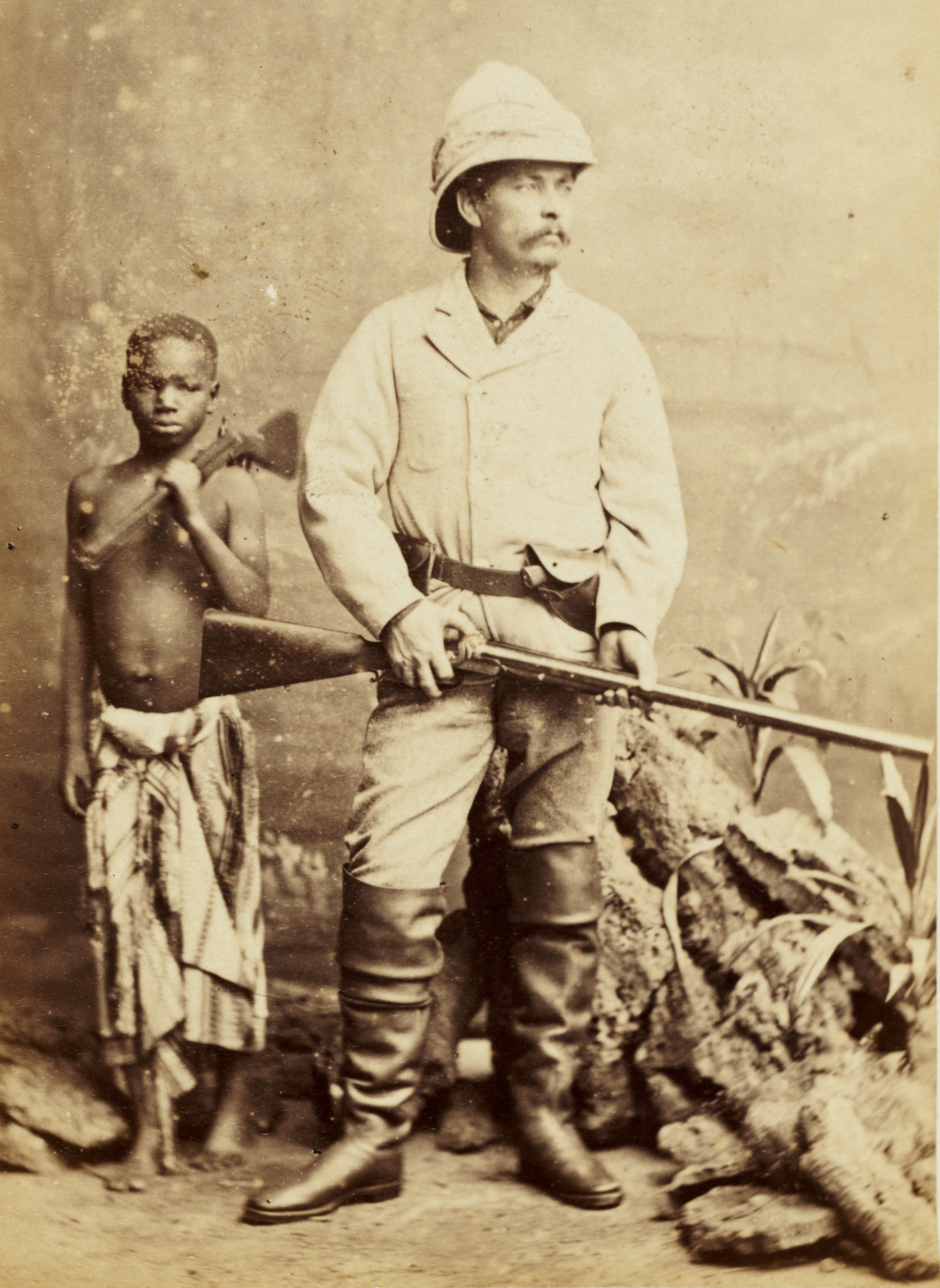
Not only was his cover story false, so was Rowlands himself.  Yes, he’d been born John Rowlands, but not in the United States as he’d led people to believe.   He had been born in Wales.  After working for a man who mentored him in Louisiana, Rowlands adopted the man’s name as his own.  He was now Henry Stanley, journalist and explorer.

Stanley was heading for the village of Ujiji on the shores of Lake Tanganyika, where he believed he might find the missing Dr. David Livingstone.  The doctor had made arrangement before leaving England to have resupply shipments sent to Ujiji, and Stanley figured he’d either find the doctor there or find out about his whereabouts.

Malaria, dysentery, smallpox, warring tribes, deserting porters, theft of supplies, nothing would deter Stanley from his obsession.   His largest worry was that he would learn Livingstone was either not in Ujiji or was dead.

And so he pushed onward, through horrendous swamps and arid stretches, pausing only when he was sick, not when any of his hired men were sick.   He was also finding that he liked the feeling of power over men, often administered with a whip.