"I'm going to speak my mind because I have nothing to lose."--S.I. Hayakawa
_______________________________________________________

Saturday, March 14, 2020

The 2020 Africa Journals


Chapter Four
Where the kudu and the elephants roam


We leave Daddy Jacana to his domestic duties and head upriver, making two stops before we actually get underway in a main channel of the river.

First stop:   a beautiful golden heron, known as a Squacco heron.  Like most herons, they look like statues while hunting, then lunging when they spot their prey.


The beautiful Squacco heron


We leave the heron, and pass by some ubiquitous dark birds that are seen all along this section of the river.

The first is an unusual bird called an Africa darter (Anhinga rufa), also called a snakebird as it swims with its entire body underwater with only its long neck sticking up that resembles a snake.  Because it has no oil on its feathers, the bird must spread its wings to dry upon exiting the water.  


The second bird is a reed cormorant (Microcarbo africanus).  It is another bird that hunts underwater for fish and invertebrates.


But first, we have to make a stop at the boundary of the Chobe National Park and check in.

Yes, this portion of the river is in a national park of Botswana.  The park “office” is as basic as it gets.  A small building, restrooms outside to the left, and a guy who sits in a chair outside.   I’m not sure what his job is, if indeed he does have an official job, but it seems to be waving you off if the park “office” isn’t yet manned.


With that deed done, onward we go, passing seen and unseen bumps in the river known as hippos, baboons onshore, some beautiful kudu, one of the larger antelope of Africa.

And then, almost hidden in the woods, an elephant raises its truck to smell us.   Friend or foe?


Most undoubtedly, we are friends, Mr. Elephant.  Slowly it comes out of the trees but remains onshore until we pass and round a corner.    


Here is where the action—and fun—is happening.

A number of elephants are frolicking in the water.   Drinking, splashing, snorkeling, it’s a barrel of fun for all of us.  With the water increasing their buoyancy, the ellies are trying to climb on their buddies’ backs, and in general behaving like human kids at the beach.


Some, of course, are more sedate, limiting their river time to sucking up vast quantities of water with their trunks and then blowing it down their throats.


Sunset was nigh and our time with the ellies was coming to a close.  There are time limits.   On land, all visitors must exit the park by 6 P.M. and I suspect it’s the same on the river.
We head back to the lodge under a beautiful sunset.


Thursday, March 12, 2020

The 2020 Africa Journals

Chapter Three

Down to the river and the boats


I’ll show you around the Pangolin hotel here in Kasane, Botswana later.   Right now, let’s get to the reason for being here.

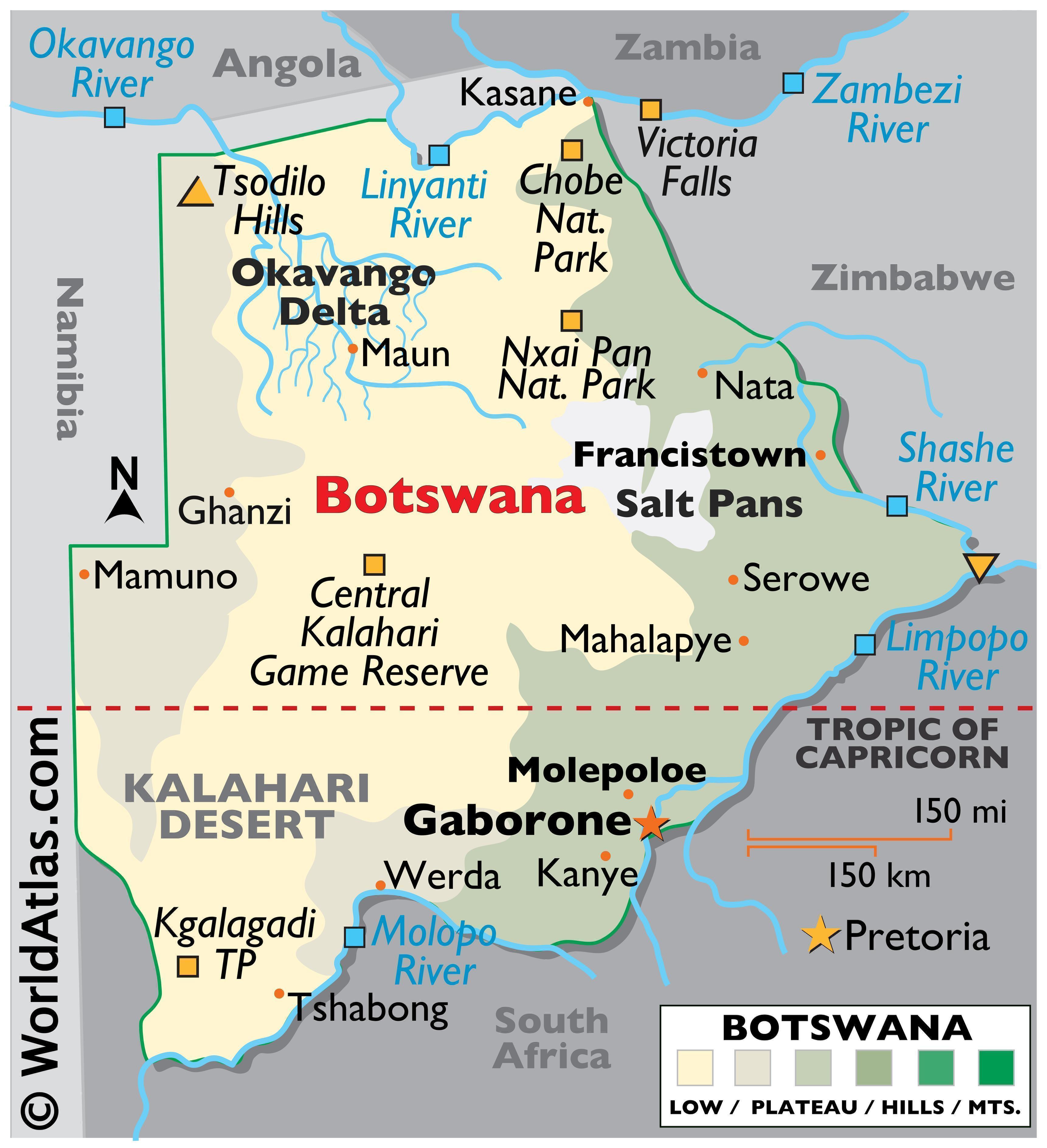
Image result for map of botswana
We are in Kasane at the very top of Botswana.   Four countries come together here--Botswana, Naibia, Zambia, and Zimbabwe.


We arrived just in time to somewhat unpack and get our gear squared away.   Then, after snacks at afternoon tea, it was down to the Chobe river where the photo boats are.   Pangolin is owned and operated BY and FOR photographers (beginners and experts)  and they have thought of everything.


A display at the lodge.


First, the boats.   There are three shallow-draft aluminum boats that feature a canopy that keeps the sun off the passengers and the cameras.   There are about eight seats with a vertical support mounted to the deck and gimbal heads to mount your camera/lens.

For non-photographers, a gimbal head is mounted to a single support and allows the user to pivot the camera up, down, and all around.   Seriously.  With swivel seats for the photographer, you can swing your camera to wherever the action is.  These are study, professional gear and you needn’t fear for the safety of your expensive gear.


Hopefully, though, you mind the length your lens is extended when swiveling past your neighbor.

There are even two cup holders included for beverages, or, in my case, a small notebook to write down the name of the bird or wildlife I was seeing and a soft drink in the other.

Janine (wife of owner Gerhard “Guts” Swanepoel and a photographer in her own right) was our guide and photo mentor on the first river trip and Tonya was at the helm.

I traveled to Botswana and the Chobe River in 2014 and stayed at a lodge along the river.  I went on a sight-seeing boat ride along the river a couple times and was astonished at the number of elephants I saw.  

I thought I knew what to expect.   HAH!  With a different focus, pardon the pun, I discovered there is much more to the Chobe than I thought, especially if one loves to photograph birds.


Guts and Tonya on a different day.


And birds were first on the slate.   Specifically, a small wading bird called a jacana.


Tonya steered the boat up a shallow waterway they call the “bird channel” to where a jacana was incubating eggs.   We dodged lily pads, thick masses of vegetation, and hippos on the way.   


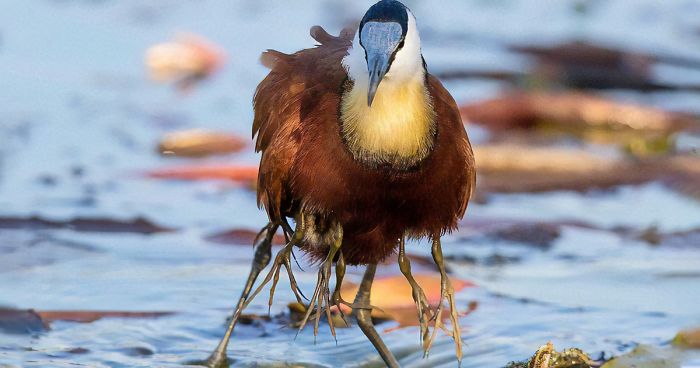
Look at the feet on that little bird!  Jacana's average eight inches in length and have a wingspan of about 20 inches.

The female jacana often has a harem of males with which she breeds and then lays eggs in a simple nest on the ground.   But it’s the male (one of the males) that incubates the eggs and nurtures the hatchlings.


Tose amazing toes enable the jacana to spread its weight and walk on lily pads.


Every day, often twice during the same trip, we checked on the nest.   We all hope the eggs would hatch because the male then gathers the hatchlings under his wings and walks around the lily pads with long baby legs and feet dangling from his wings.  What a photo that would make!


Image result for photo of jacana with hatchlings
Borrowed photo of a jacana with hatchlings under his wings.


I borrowed this photo: 


 These are mine.


A nest with four eggs.

Daddy on the nest.


It was not to be.  The eggs didn’t hatch until two days after we left.   Nevertheless, we took a proprietary interest in the bird and his eggs and spent a lot of time with him.   He didn’t care and when we found he wasn’t on the nest a couple times, began to suspect we were baby-sitting the eggs while he was off for a burger and a beer.


Look at those exquisite eggs!