"I'm going to speak my mind because I have nothing to lose."--S.I. Hayakawa
_______________________________________________________

Wednesday, April 10, 2013

The Nice Day for a Drive Journals, Ch. 5, Ghost Town


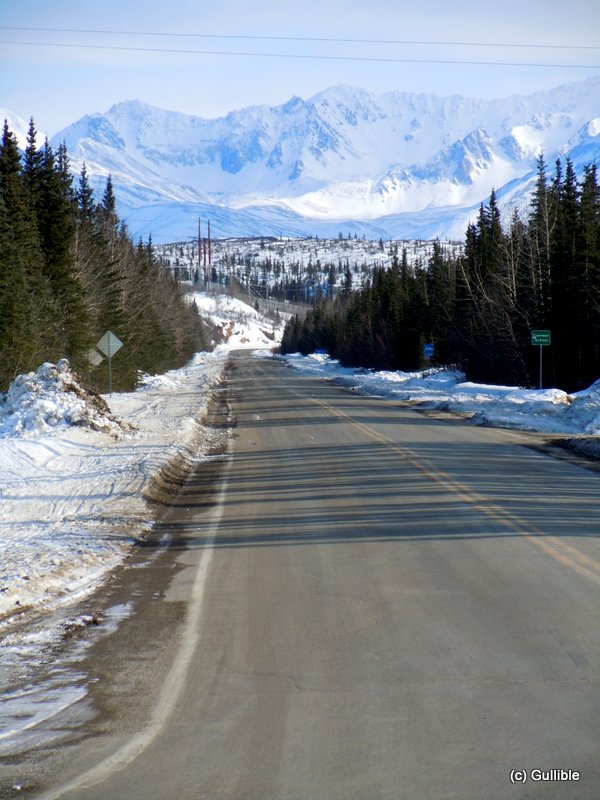
And we’re off on a drive through the Alaska Range, home of Denali, the largest mountain on the North American continent.  (Some people still insist on calling it Mt. McKinley, but we know better, don’t we?)   


The highway follows and makes numerous crossings of the Nenana (NEE-nah-nuh) River as it cuts through the mountains.   From Cantwell to the next town of Healy, the distance through the mountains is roughly thirty miles.

Fifteen miles into the mountains we reach the ghost town of Denali village, a strip of commercial development less than two miles long on both sides of the highway just north of the entrance to Denali National Park and Preserve.  All this Wasilla-fication horrifies most Alaskans who like their highways scenic and not fraught with commercial signs, but it’s a welcome sense of civilization in the middle of nowhere for tourists, even if it is less than two miles long.
One of the lodges way up on the hill.


Denali Salmon Bake, my favorite restaurant there.


This is where all the lodges, outfitters, and restaurants are located.  You can raft the Nenana River, buy a more or less authentic Native Alaska ulu (a curved knife with bone or wooden handle that’s shaped like a fifth of a pie), and feast on salmon, halibut tacos, and king crab legs.   Or burgers or 
ice cream or coffee.


Ulu knife.


This is where I stay in my RV.


Can't say I've ever been in here.
During the summer, all the gift shops are always having a  "giant sale."


There’s also a Chinese fast food wagon where, if you order Almond Chicken you may not get Almond Chicken but Orange Chicken instead.   (http://gullible-gulliblestravels.blogspot.com/2011/08/you-say-tomato-and-i-say-tomahto.html)   Well, Pablo liked it a whole lot more than I did.


And chewed his plate clean.


Campers can get the gear they forgot, as well as Park-approved food storage containers that are a must when in grizzly country.  


Bearcanister
Bear proof food storage container.
One of the local park denizens.  DEN-izens--get it?


You can gas up the RVs, buy tee shirts, some nice and some tacky souvenirs, and find the warm clothes and rain gear you should have brought with you but didn’t because, after all, it’s summer., isn’t it?   Forgetting, of course, that this is Alaska and summer is on the Fourth of July, unless it snows.   And I have seen it snow in Moose Pass on the Fourth of July.


But this drive is in March and it’s most definitely winter.  As a result, Denali village is a ghost town.   Even the traffic lights—so very necessary when thousands of people are packed into a mile and a half stretch—are covered and on vacation for the winter.


Covered traffic light.
 

During the summer months, most of these services are duplicated within a small village inside the park boundaries, and all of these places seem to do a whopping business during their three-month “season.”

Ah, but nothing moves in Denali village as we drive through.   It’s vacant and boarded up, so let’s head north.


Summer photos from Denali Village: 


Overview of Denali village. See the serpentine road going to that lodge on the hill?


Part of Denali Village.


Terrific restaurant.  Try it if you're ever there.

Cook shack for restaurant.   I find these "local-owned business" signs in all the towns where cruise ships visit, and I try to shop there.   I think the others are cruise-line owned, which probably explains why the myriad jewelry stores in Skagway that sell gems not occurring naturally in Alaska.

Inside the Salmon Bake restaurant.

Close up of a walking stick that sang a Siren's call to me.   Just couldn't justify the price.  Or the fact that it was made for someone a foot taller than me.


The white Denali Park buses are the only way you can get into the park.

Commercial area within the park.

How most cruise ship passengers get to the park.


Monday, April 8, 2013

A Writing Prompt from Ann Linquist


(Another break from the road trip while I gas up the truck.)


The prompt:

The postcard showed five women in jazzy hats.  The backdrop was a dappled pink.  Not a scene, just something painted in.   June started to throw the postcard away, and then she hesitated.


The response:

Molly held the postcard in her hands and marveled at the background rendered in pink bokeh. She had another postcard like this somewhere in the house, with the background in aqua. She should put this one with it, she decided. Molly liked putting apples with apples and oranges with oranges, or, in this case, postcards with postcards.

Simetimes, though, the effort required to do that was just too much and Molly gave up. Her intentions were good, but with the way things were these days, she simply couldn’t manage.

She looked around the room, wondering where her postcard collection was. “If I were a postcard,” she asked, “Where would I be?” She decided to start her search in the second bedroom, the one she hadn’t been in for years. She vaguely recalled seeing some postcards in there a long time ago.

Molly struggled out of her chair and slowly made her way to the hallway and the second bedroom. She never called it a “guest room” because it had been so many years since she’d had an overnight guest, well… She just couldn’t remember when. That’s how things are these days, she thought.

She stood at the door opening and said “Postcards, postcards, where are you?” A few minutes later, Molly decided she would save the search for another day, and made her way down the hall to the kitchen where she slipped the postcard under the edge of a stack of magazines on the counter—the ones she meant to read some day.

“The keepers” she called them, but it seemed she never had time to get at them. That’s how things are these days, she thought.

Exhausted from her efforts, Molly sat down on the pile of clothing in front of the washer and dryer. I really should get to these clothes, but I just don’t have the energy, she thought. After a while, Molly fell asleep on the pile.

When she awoke, Molly thought she should make an effort at tidying the house because she was expecting guests the next day. It seemed such an overwhelming project that she was exhausted just thinking about it. It was so difficult to move these days, and, well, that’s just how things are now.

Molly realized she was hungry and decided to order pizza. Now she had to find her cordless phone.  She tried to recall when she’d used it last and figured it was the last time she’d ordered takeout.

When was that? Was it last night? This morning? Two days ago? She couldn’t remember. Well, she thought, that’s the norm these days.

She struggled through the few parts of the house that she actually used and finally found her phone in the living room on top of a large package of paper towels she’d left by the front door. At least I could put these paper towels in the pantry, thought Molly, but by the time she’d speed-dialed the pizza parlor, she’d forgotten about the towels and putting them away. Just like always these days.

Molly woke up the next morning and grabbed a slice of left-over pizza for breakfast. Her guests would be here any minute, she realized. Whatever will they think? This is frightening, she thought, and realized she didn’t think she could go through with this. She jumped when she heard the knock at the door.

“Hello, Molly. I’m Dr. Laurel Baines. I’m a licensed psychologist and I specialize in hoarding disorders. I’m here to help you today.”

“Come in,” said Molly, “If you can find room.”

Thursday, April 4, 2013

The Nice Day for a Drive Journals, Ch. 4, Cantwell and the Denali Hwy.


The Denali highway runs through the pass in the center of this photo.


 Now that we’ve all oohed and ahhed at Hurricane Gulch, let’s continue our journey north.  Still traveling with the Alaska range on the left—including glimpses of Denali on this bright sunny day—and the Talkeetna Range on our right, we drive through a broad pass, called, coincidentally, Broad Pass.


Alaska Range

Talkeetna mountains on right


Then we come to the small town Cantwell, where a couple hundred folks live hard up against the flanks of the Alaska Range, and the junction of the Denali Highway, which stretches east 135 miles to the town of Paxson.  Until construction of the Parks Highway in 1971, the only road access to Denali National Park was by the Denali highway.  It’s a rough, winding, twisting,  gravel challenge of a road, especially after several days of rain.  


In some portions, the highway runs along the tops of eskers, which are winding ridges of silt, sand, rock, and gravel formed by melting glaciers and underlying streams.   They make for exciting driving, especially if you're daring enough to take a 33 foot Class A motorhome across them.


Though the scenic beauty of the surrounding area  is what draws many to Denali Highway, it also is nothing to be tinkered with in winter.  The road is closed in winter and it becomes a snowmachiner’s paradise.


 Paved for three miles on the Cantwell end, and 21 miles on the Paxson end, the highway is inviting in winter.   Don't do it.


On January 11, 1996, two grandparents picked up their two-year-old grandson to take him for a ride, as was their custom.  They intended to head south, towards Seward or Homer.   When they had not returned after four days, the mother called police on Jan. 15.

On the 15th, two men who had been hunting, reported to the Alaska State Troopers in Cantwell that they had come upon a red Subaru abandoned in 18 inches of snow on the Denali Highway, about 80 miles from Cantwell and 50 miles from Paxson.  There was a “HELP” sign stomped in the snow and an arrow pointing east toward Paxson.  Words was relayed through the troopers system until it reached Paxson about 6 p.m.   Temperatures were 45 degrees below zero at night, and caution was necessary when traveling that area.

After much discussion, it was decided that they would wait until morning when two troopers could travel by snowmachine to investigate.   Later that night the Anchorage Troopers were advised of the missing grandparents and child and the media advised people to watch for the missing trio south of Anchorage.

On January 18, six days after their disappearance, the frozen bodies of the grandparents and their grandson were found eight miles from their stuck vehicle.

The Denali Highway is a beautiful stretch of road, but nothing to be tinkered with in winter.


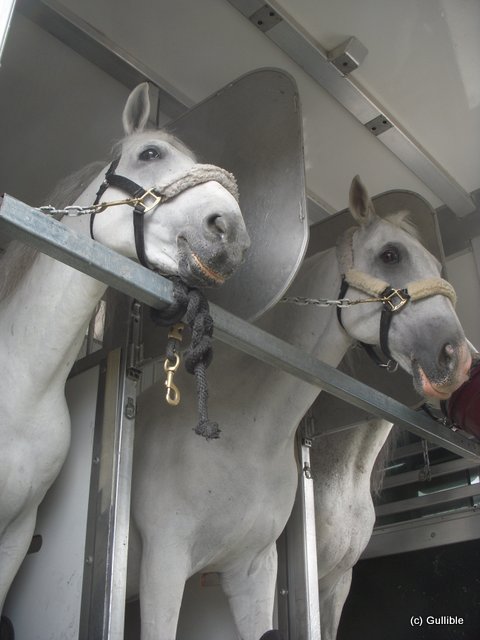
My customary stop in Cantwell burned down last winter.  It's being rebuilt.   It was here, a few summers ago, that I came across a touring herd of Lippizan show horses, their trailers parked here for a break.


Gas in Cantwell at another station.


Denali Highway in summer.

Denali highway in summer.

Mud, mud, and more mud after the rain.

Crossing the Susitna river.


Byway Standard Map


Tuesday, April 2, 2013

Murphy's Law, Alaskan Style

Be it red squirrel, Arctic Hare, or moose, if it's on the side of the road as you're driving towards it,....


...it will ALWAYS .....


..want to be on the OTHER SIDE of the road.


Much to amusement of bald eagles.


Or maybe not.     Hard to tell with eagles.

Monday, April 1, 2013

Ann Linquist Prompt--The Meaning of Life

Ann spoke to my Muse last night and my Muse kicked me out of bed to take dictation.   At midnight.


Ann Linquist’s Prompt:

Once upon a time a forty-year-old man named Peter sat under a red maple tree in a secluded corner of his backyard and tried to figure out the meaning of life.  He had a happy marriage: Check.  He’d found a profession that was reasonably satisfying:  Check.  Two rather nice children:  Check.  Saved for their college education:  Check.  On track to retire in twenty years:  Check.  Health holding up fine:  Check.

So, with his wife and kids out of town at the family reunion he’d preferred to skip, he was on his own this week and on vacation as well.  No one was depending on him; no one was expecting him to show up.  He had complete freedom for seven days.

He finished his morning coffee and set the mug down on the grass.  He ate a cereal bar and stuck the wrapper into the pocket of his wind breaker.  He sat.  He licked his lips.  He sniffed the early autumn air.  Now what?


DAY ONE:


Peter sat under the maple tree in his back yard with a cup of coffee, contemplating the meaning of life. This was the first of seven days of absolute freedom—freedom from work, the wife and kids, and anything else that got in the way.

I can do anything, he realized, and no one would be the wiser, as long as I don’t get arrested.
First thing I’m going to do, he decided, is go over to the Village Inn and have some bacon and eggs. Jen would never allow bacon in the house, so here’s my chance. This is my first little sinful rebellion, he laughed. So, off he went to the Village Inn Pancake House.

“Coffee, black. No, wait. Coffee with real cream and real sugar,” said Peter. “A rasher of bacon and a soft-boiled… no, make that two eggs over medium, rye toast.” He paused. “And a short stack.”
When his feast arrived, Peter savored every last bite, then sat back in the booth with a self-satisfied smile. He tipped the waitress thirty percent, throwing economic caution out the door, and headed home.

DAY TWO:


Peter got up late, very late, before going to the maple tree to contemplate the meaning of life over a glass of milk. “Before the crack of noon,” as he used to say in college, which was the last time he could remember sleeping so late.

Actually, Peter had to get up several times during the night and use the restroom, thanks to the vast quantity of water he drank yesterday because of the salty bacon. Every time he got up, he’d also had a glass of water with an Alka-Seltzer fizzing in it, thanks to the unaccustomed fat intake at breakfast.

As he drank the milk,  he remembered Al, the guy at work who always had the hottest stories about the strip club across town. That’s what I’ll do, he decided, and off to the strip club he went—after looking up its address in the phone book. The stink of cigarette smoke almost changed his mind when we walked in, but he decided he could tolerate it for one night on the town.

“Bud Lite,” he said to the barely-clad girl, then sat back to watch the show. On stage a girl with torn fishnet stockings who looked to be about sixteen was squirming around a pole, somewhat in beat to the horrendously loud music. He tried to catch some of the lyrics, but the singer was screaming and lyric-detecting was impossible. Instead, he concentrated on the girl’s body  dancing until his collar started to feel too tight.

He caught sight of some guys across the bar. He noticed their buzz cuts and figured they were from the nearby military base. They were partying hearty, perhaps too heartily, Peter realized, and remembered he’d done the same thing before shipping out to Vietnam. He signaled the server and bought a round for the GIs.

When she served it, they turned to Peter with expectant faces. Peter raised two fingers to his eyebrow. The boys did the same, their expressions gone solemn, their shoulders straightened, their jaws rock hard with determination, but with the shadow of fear in their eyes.

It was hard to think of those young men going to war. He left his beer unfinished. It seemed to have gone skunky sometime in the last few minutes.

DAY THREE:


Peter sat under the maple tree until mid-afternoon, contemplating the meaning of life. Earlier, he’d taken his jacket to the dry cleaners to get the cigarette stink out of it.  He threw the rest of the clothes he’d worn into the washer.

Now what? Poker. Yeah, Jim always invites me to poker on Wednesdays, but that’s the night I coach Bobby’s Little League practices so I was never free to attend. So, poker it is.

He called Jim and walked over to his house.

“What’s the ante, guys?” asked Peter. They were in Jim’s garage because Jim’s wife wouldn’t allow cigarettes or cigars in the house, and what’s a poker game without smoke? They also had to keep the overhead doors open, and that let in the mosquitoes.

Later on, fifty bucks poorer, Peter walked home, grabbed a glass of water, and sat under the maple tree, scratching the mosquito bites on his forehead. Fifty bucks, he moaned. For that, I could have taken Jen and the kids to a movie they’ve been wanting to see.

DAY FOUR:


Peter sat under the maple tree, contemplating the meaning of life. He was at a loss as to what to do today. Jen had called late last night. She had her relatives on the line. Peter spoke with her father, Ben, a man he’d come to love as much as his own father.

Darn, he missed that guy. He should have gone to the reunion.

Peter went to bed early that night, but sleep was to find.

DAY FIVE:


Peter sat under the maple with his morning coffee, contemplating the meaning of life. Today and two more, thought Peter. If I’m going to break loose and do something wild, it better be soon.

His gaze crossed the yard and landed on a blue tarp covering a pile of lumber that he’d foolishly bought a few years back. Probably rotten by now, he thought.

Well, that’s what I’ll do today—cut it up for firewood.

When he pulled the tarp off, though, the cedar was a clean as the day he’d bought it. He looked at it for a while, then went back to the maple tree.

Something wild and crazy, he thought, and stayed under the maple tree for a long time.

DAY SIX:


Peter got up early, feeling like a million bucks. He had a quick cup of coffee under the maple tree, briefly contemplated the meaning of life, then got to his agenda for the day. A half hour later, all the neighborhood guys showed up with their toys.

“Man Cave day!” declared Henry and the others cheered.

DAY SEVEN:


Peter sat under the maple tree with his coffee, contemplating the meaning of life.

He finished his coffee, then hustled about cleaning up the evidence of Man Cave day.

DAY EIGHT:


Peter had to skip his morning contemplation of life under the maple tree because Jen’s plane arrived at 6:30 A.M.  Life-contemplating would have to wait, he decided.

He parked the car in the driveway, unloaded the suitcases, and followed his family into the house. “I missed you guys, really missed you. I have something to show you,” he said, and led the way to the back door. “This is for you.” He opened the door onto the beautiful, exquisite multi-level cedar deck. He’d even gone to Home Depot and bought some potted plants to dress it up.

Later that day, his kids yelled and shouted down from their new tree house in the maple, “We love it, Dad! It’s the best tree house ever. We love it!”

A leaf with the first blush of autumn landed in Peter’s lap while he and Jen sat under the maple tree enjoying the meaning of life. He laughed, knowing the leaves were going to have to hang on tightly this season if they were going to survive two rambunctious kids playing in the arms of the old maple tree.